E-commerce vs Marketplace Qatar: Which Is Better for Your Brand?
06 Oct, 2026
E-commerce vs Marketplace Qatar: Which Is Better for Your Brand?
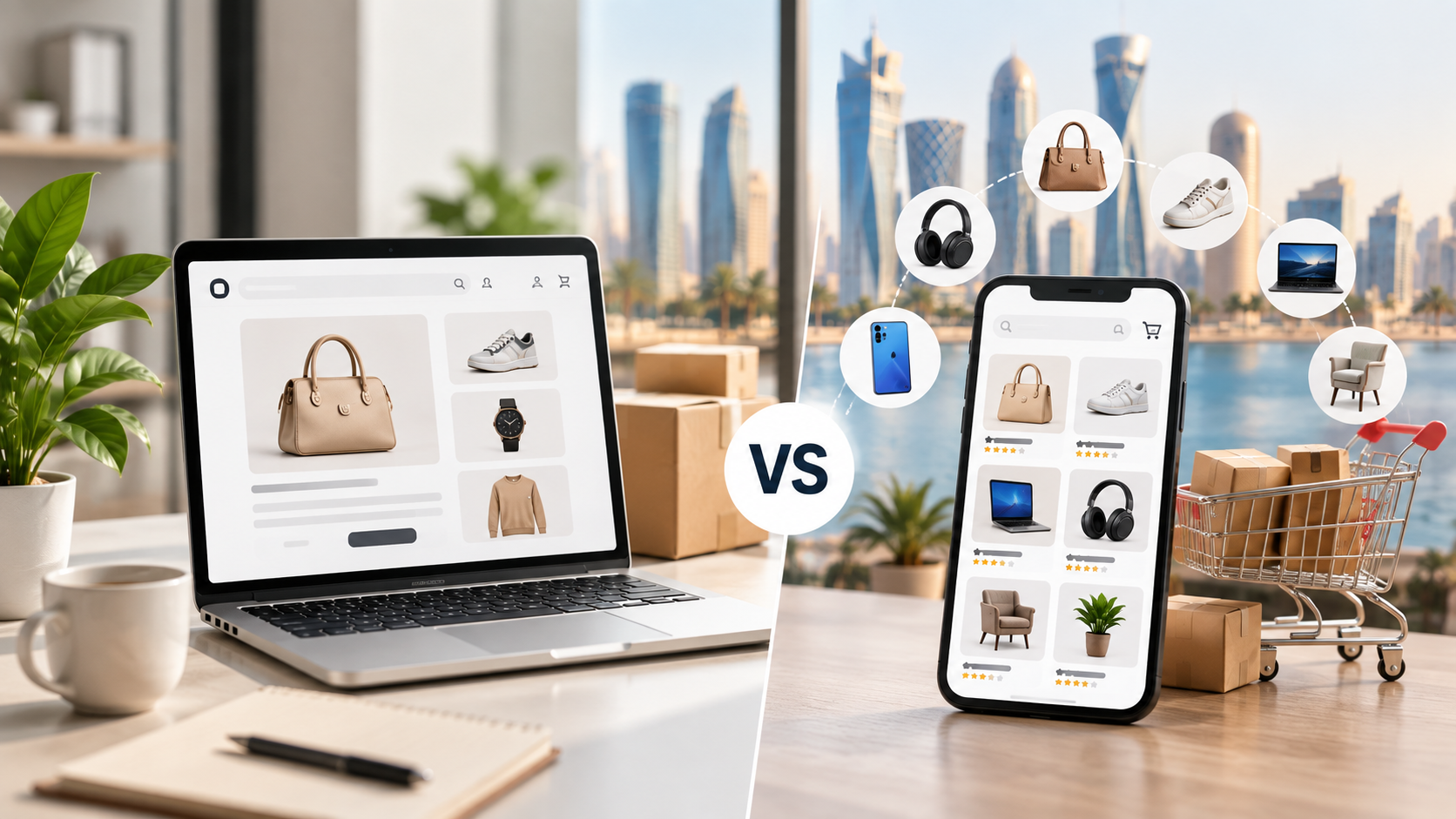
The e-commerce vs marketplace Qatar debate is one every growing brand faces sooner or later. Should you build your own online store, or list products on a platform that already has shoppers?
Both routes can work. However, they lead to very different results in cost, control, and long-term growth. Choosing wrongly can mean thin margins, no customer data, or a store nobody visits.
This guide explains e-commerce vs marketplace Qatar selling in plain terms. You will see the real trade-offs, practical examples, and a simple way to decide.
Since 2002, Orange Web Design Qatar has helped Doha businesses build websites that sell. The insights below come from that experience.
What Is the Difference in E-commerce vs Marketplace Qatar Selling?
First, let’s define both models clearly.
Your Own Ecommerce Website
An ecommerce website Qatar shoppers can visit directly is a store you own. You control the design, pricing, product pages, checkout, and customer relationships. Your brand is the centre of attention.
An Online Marketplace
An online marketplace Qatar customers already use is a shared platform where many sellers list products. The platform brings traffic, but it also sets the rules, fees, and layout. Your brand sits next to your competitors.
Think of it this way. A marketplace is like renting a shop in a busy mall. Your own store is like owning a building on your own street. The mall gives footfall, while your building gives freedom.
Pros and Cons: E-commerce vs Marketplace Qatar
Let’s compare the two models side by side.
Benefits of Your Own Online Store
- Full control over branding, pricing, and promotions
- Direct access to customer data and email lists
- No commission on every sale
- Freedom to build loyalty programmes and subscriptions
- A long-term digital asset that increases business value
The main drawbacks are setup effort and the need to build your own traffic.
Benefits of Marketplace Selling
- Instant access to an existing audience
- Faster launch with less technical work
- Built-in trust from a familiar platform
- Simple payment and delivery support on some platforms
On the other hand, commissions reduce margins. Price competition is strong, and platform rules can change without notice.
Cost Comparison in E-commerce vs Marketplace Qatar
Cost is often the deciding factor when weighing e-commerce vs marketplace Qatar options. The two models charge you in different ways.
Marketplace Costs
Marketplaces usually charge listing fees, commissions, or advertising costs. These are small at first but grow with sales. Over time, a percentage of every order goes to the platform.
Costs of Your Own Store
A store has upfront costs. These include design, a domain, hosting, a payment gateway, and marketing. After launch, ongoing costs are mostly maintenance and promotion.
Here is a simple example. A Doha gift retailer selling 500 orders a month may pay steady commissions on a marketplace. Their own store needs investment first, but each extra order costs far less.
Reliable web hosting in Qatar also keeps your store fast and secure. That protects sales during busy seasons such as Ramadan and National Day.
Brand Identity and Customer Data
Branding is where the e-commerce vs marketplace Qatar comparison becomes most important.
On your own site, customers see your logo, story, and design. They remember you. On a marketplace, they often remember the platform instead.
Customer data matters even more. With your own store, you collect emails, purchase history, and preferences. You can then run campaigns, send offers, and encourage repeat purchases.
Most marketplaces keep that data. As a result, you rent customers instead of owning relationships.
Traffic and Visibility: Which Brings More Buyers?
Marketplaces win on early traffic. Shoppers already visit them daily, so a new seller can get views quickly.
Your own store needs a visibility plan. Strong SEO for online stores helps you appear when people search for your products. Professional SEO services in Qatar can build that traffic steadily, without paying for every click.
Consider also AEO and GEO. Answer engine optimisation means writing clear answers that search tools and AI assistants can quote. Generative engine optimisation means making your brand easy for AI systems to understand. Both reward helpful content and consistent local details.
Trust, Experience, and EEAT
Shoppers in Qatar want proof that a business is real. Google looks for the same signals, known as EEAT: experience, expertise, authority, and trust.
On your own site, you can build EEAT clearly:
- A detailed About page and team information
- A registered business address and phone number
- Customer reviews and case studies
- Clear return, delivery, and privacy policies
- Helpful guides that show product knowledge
Marketplaces provide trust through their own name. Still, that trust belongs to the platform, not to you.
Which Option Fits Your Business?
The right answer in e-commerce vs marketplace Qatar selling depends on your stage and goals.
Choose a Marketplace If:
- You are testing a product with little budget
- You need quick sales and market feedback
- You sell commodity items with low differentiation
- You lack time for marketing and technical setup
Choose Your Own Store If:
- You want a strong, memorable brand
- You aim for higher margins over time
- You sell unique, premium, or custom products
- You want customer data and long-term loyalty
Examples help here. A new electronics reseller may start on a marketplace to test demand. A local fashion label with a clear style should invest in its own store to protect its identity.
The Hybrid Strategy: Use Both
Many successful brands do not choose only one. In the e-commerce vs marketplace Qatar decision, a hybrid approach often wins.
Here is a practical path:
- Launch on a marketplace to validate products quickly.
- Build your own store in parallel.
- Add inserts or offers that guide buyers to your website, where platform rules allow.
- Move loyal customers to your store for repeat purchases.
- Keep the marketplace as an extra sales and discovery channel.
This approach reduces risk. It also builds an asset you control.
What Your Store Needs to Succeed
If you decide to build, quality matters. A weak website will not compete with a polished marketplace.
Focus on these essentials:
- A mobile-friendly website, since most Qatar shoppers browse on phones
- Arabic and English versions with correct right-to-left layout
- A trusted payment gateway Qatar customers recognise
- Fast loading pages and clear checkout steps
- Clean product pages with strong images
Custom e-commerce website development in Qatar helps you meet these needs without costly rebuilds. Our article on what professional website design can do for business growth explains the design side in more detail.
If you are starting from zero, our step-by-step guide on how to start an online store in Qatar covers licensing, hosting, and launch.
Mistakes to Avoid in E-commerce vs Marketplace Qatar Decisions
- Choosing only by price, without thinking about brand value
- Depending on a single marketplace for all revenue
- Launching a store without an SEO or marketing plan
- Ignoring mobile users and Arabic-speaking customers
- Hiding delivery costs until checkout
- Skipping security updates and backups
Frequently Asked Questions
Which is better in e-commerce vs marketplace Qatar selling for beginners?
Marketplaces are easier for quick testing. However, if you want to build a lasting brand, your own store is the stronger long-term choice.
Is e-commerce vs marketplace Qatar cost really different?
Yes. Marketplaces charge ongoing commissions and fees. Your own store requires higher upfront investment but usually lower costs per sale later.
Can I sell on both a marketplace and my own website?
Yes. Many Qatar brands use both. The marketplace brings discovery, while the website builds loyalty and customer data.
Do I need a licence to sell online in Qatar?
You need a valid commercial registration and a trade licence covering your activity. Always confirm current requirements with the Ministry of Commerce and Industry.
How long does it take to build an online store?
Small to medium websites usually take four to twelve weeks. Complex stores with custom features can take longer.
Final Thoughts
The best answer to e-commerce vs marketplace Qatar is rarely one or the other. Marketplaces give speed, while your own store gives control, margins, and brand value.
Start with your goals, budget, and product type. Then build a plan that grows with you.
Ready to build your own store? Our team can design, host, and optimise it for you, so your store ranks and converts from day one.
Get Your Free E-Commerce Consultation →
Orange Web Design Qatar
P.O Box: 20406, Doha, Qatar
Phone: +974 5518 0801
Email: info@orangeqatar.com
Hours: Saturday to Thursday, 8:00 AM to 6:00 PM