Mobile-First Design — Why Every Qatar Website Must Be Responsive in 2026
19 Aug, 2026
Mobile-First Design — Why Every Qatar Website Must Be Responsive in 2026
A mobile responsive website Qatar customers can actually use on their phones is no longer optional, it’s the baseline expectation for any business hoping to compete online in 2026. If your site still forces visitors to pinch, zoom, or scroll sideways just to read a menu or fill out a contact form, you’re losing customers before they even see what you offer.
Mobile traffic now accounts for the majority of website visits across Qatar, and search engines have shifted to mobile-first indexing, meaning Google evaluates your mobile experience first when ranking your site. A business without a mobile responsive website Qatar shoppers can navigate smoothly is effectively invisible to a huge share of its potential audience.
In this guide, we explain what mobile-first design actually means, why it matters more than ever in 2026, and exactly how to fix a website that isn’t performing well on smartphones.
What Is a Mobile Responsive Website Qatar Businesses Need
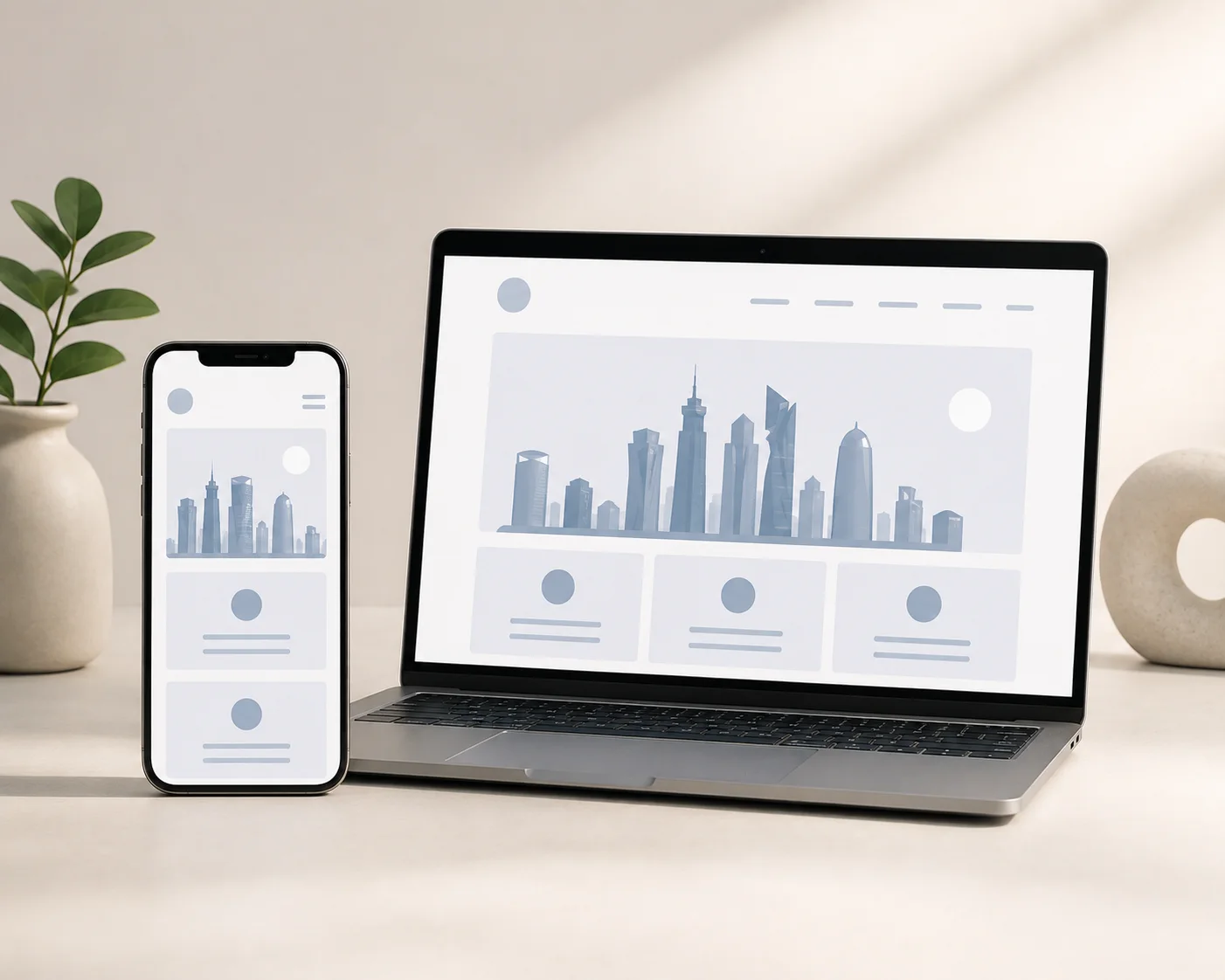
A mobile responsive website Qatar developers build automatically adjusts its layout, images, and navigation based on the device it’s being viewed on, whether that’s a smartphone, tablet, or desktop computer. Instead of maintaining separate versions of your site, responsive design uses flexible grids and code that reshapes the page in real time.
This is different from simply having a website that “looks okay” on mobile, since a true mobile responsive website Qatar audiences trust performs well under real conditions, not just in a quick preview. A truly mobile friendly website design Qatar customers respond well to includes readable text without zooming, buttons large enough to tap accurately, images that load quickly on mobile data, and navigation menus built for touch screens rather than mouse clicks.
Why Mobile Responsive Website Design Is Important in 2026
Understanding why mobile responsive website is important starts with a simple fact, most of your customers are finding you on their phones, whether they’re searching on the way to a meeting, comparing options during a commute, or browsing in the evening.
Search Rankings and Visibility
Google uses mobile-first indexing, which means it primarily crawls and ranks the mobile version of your site. A site that isn’t optimised for mobile can rank lower in search results, even if the desktop version looks professional.
Customer Trust and Brand Perception
A broken or clunky mobile experience signals to visitors that a business isn’t paying attention to detail. Customers often judge credibility within seconds, and a poorly formatted mobile site damages that first impression instantly.
Conversion Rates
Whether you’re collecting leads, taking bookings, or selling products, a mobile optimized website Qatar visitors can navigate easily converts far better than one that frustrates users with tiny text or broken buttons.
Competitive Pressure
If competitors in your industry already offer a smooth mobile experience and your site doesn’t, customers will simply choose the easier option, often without a second thought.
Responsive vs Adaptive Website Design: What’s the Difference
Business owners often confuse these two approaches, so it’s worth clarifying the responsive vs adaptive website design distinction before choosing a direction for your project.
Responsive design uses flexible code that reshapes continuously across any screen size, adjusting smoothly whether the visitor is on a small phone or a large tablet. Adaptive design instead uses several fixed layouts, each triggered at specific breakpoints, meaning it “jumps” between set versions rather than flowing continuously.
For most Qatar businesses, responsive design is the more future-proof choice, since it automatically adapts to any new device size without requiring a redesign every time a new phone model becomes popular.
Mobile First Website Design: Building for Phones First
Mobile first website design flips the traditional approach on its head. Instead of designing for desktop and then squeezing that layout onto smaller screens, developers start with the mobile experience and expand outward to tablet and desktop versions.
This approach forces cleaner decisions from the start, since mobile screens have limited space. Only the most important content, calls to action, and navigation elements make the cut, which often results in a more focused, effective website across every device.
How to Tell If Your Website Isn’t Mobile Friendly
Many business owners don’t realise their site has mobile issues until customers start complaining, or worse, until they simply stop converting. Here’s a practical website not mobile friendly fix checklist to run through:
- Run the Google mobile friendly test Qatar business owners can access for free through Google Search Console
- Open your site on an actual smartphone, not just a resized browser window
- Check whether text is readable without zooming in
- Test whether buttons and links are easy to tap accurately
- Confirm your contact forms and click-to-call buttons work properly on mobile
- Check page load speed on mobile data, not just Wi-Fi
If your site fails several of these checks, it’s a strong signal that a redesign, not just minor tweaks, is the right move toward a genuine mobile responsive website Qatar customers can rely on.
Cross Device Website Design Qatar Businesses Should Prioritise
A cross device website design Qatar customers interact with needs to work consistently whether someone starts browsing on their phone during lunch and finishes the purchase later on a laptop at home. Consistency across devices builds trust and keeps the customer journey seamless.
Key elements of strong cross-device design include:
- Consistent branding, colours, and messaging across screen sizes
- Forms and checkout flows that work identically on any device
- Images and media that load efficiently regardless of connection speed
- Navigation structures that make sense whether tapped or clicked
Responsive Website Design Cost Qatar Businesses Should Expect
Understanding responsive website design cost Qatar businesses typically budget for helps set realistic expectations before starting a project. Pricing depends on the complexity of your site, the number of pages, and whether custom functionality like booking systems or e-commerce is involved.
Simple brochure sites with responsive design tend to cost less, since the layout requirements are more straightforward. Larger sites with e-commerce, multiple languages, or custom features naturally involve more development and testing time across devices, which increases the overall investment. Regardless of budget size, responsive functionality should never be treated as optional or added later, it needs to be built into the foundation from day one.
Choosing a Responsive Web Design Company Doha Businesses Can Trust
Not every developer builds true responsive sites, some simply shrink a desktop layout without properly optimising it for touch and mobile performance. When evaluating a responsive web design company Doha businesses are considering, ask to see live examples of their previous work on an actual phone, not just screenshots.
A qualified partner should be able to explain their testing process across different devices and browsers, show real mobile page speed results, and walk you through how they approach mobile-first design decisions rather than treating mobile as an afterthought, all of which determines whether you end up with a genuine mobile responsive website Qatar customers can depend on.
How Orange Web Design Qatar Builds True Mobile Responsive Websites
At Orange Web Design Qatar, every project we deliver is a mobile responsive website Qatar customers can navigate smoothly on any device, tested thoroughly before launch rather than assumed to work. Our custom website design and development process builds mobile-first from the ground up, not as an afterthought.
Beyond design, our search engine optimization services help ensure your mobile-optimised site actually gets found in search results, since mobile performance directly affects your rankings. Once your site is live, our website maintenance service keeps it performing well as new devices and browser updates roll out.
If you’re reviewing what else your site might be missing, our earlier post on essential website features every business owner should prioritize covers several related must-haves. You can also see examples of our responsive work from the Orange Web Design Qatar homepage.
Frequently Asked Questions
1. Why is mobile responsive website design important for my business?
Most customers now browse and search on their phones, and Google ranks the mobile version of your site first. A mobile responsive website Qatar customers can use easily improves both rankings and conversions.
2. How do I check if my website is mobile friendly?
Use the Google mobile friendly test Qatar business owners can access through Search Console, then physically test your site on a real smartphone to check readability, button size, and load speed.
3. What’s the difference between responsive and adaptive design?
Responsive design flows continuously across any screen size, while adaptive design uses a set number of fixed layouts triggered at specific breakpoints. Responsive is generally the more flexible, future-proof option.
4. How much does responsive website design cost in Qatar?
Responsive website design cost Qatar businesses pay depends on site complexity, page count, and custom functionality, though it should always be included as a core part of the build, not an optional extra.
5. Can I fix an existing website to make it mobile friendly?
In some cases yes, through updated code and layout adjustments, but severely outdated sites often perform better with a full mobile-first rebuild rather than patchwork fixes.
Ready for a mobile responsive website Qatar customers will actually enjoy using? Let’s review your current site and show you exactly what needs to change.
Get a Free Mobile Website Review →
Orange Web Design Qatar
P.O. Box 20406, Doha, Qatar
Phone: +974 5518 0801 | Email: info@orangeqatar.com